Festival guide
Doclisboa 2026: A Way Into the Festival
Doclisboa 2026 runs 15–25 October in Lisbon. Five ways into its 198-film programme, from Lino Brocka and John Torres to films about Lisbon, archives and memory.
18 October 2026 · 8 min read
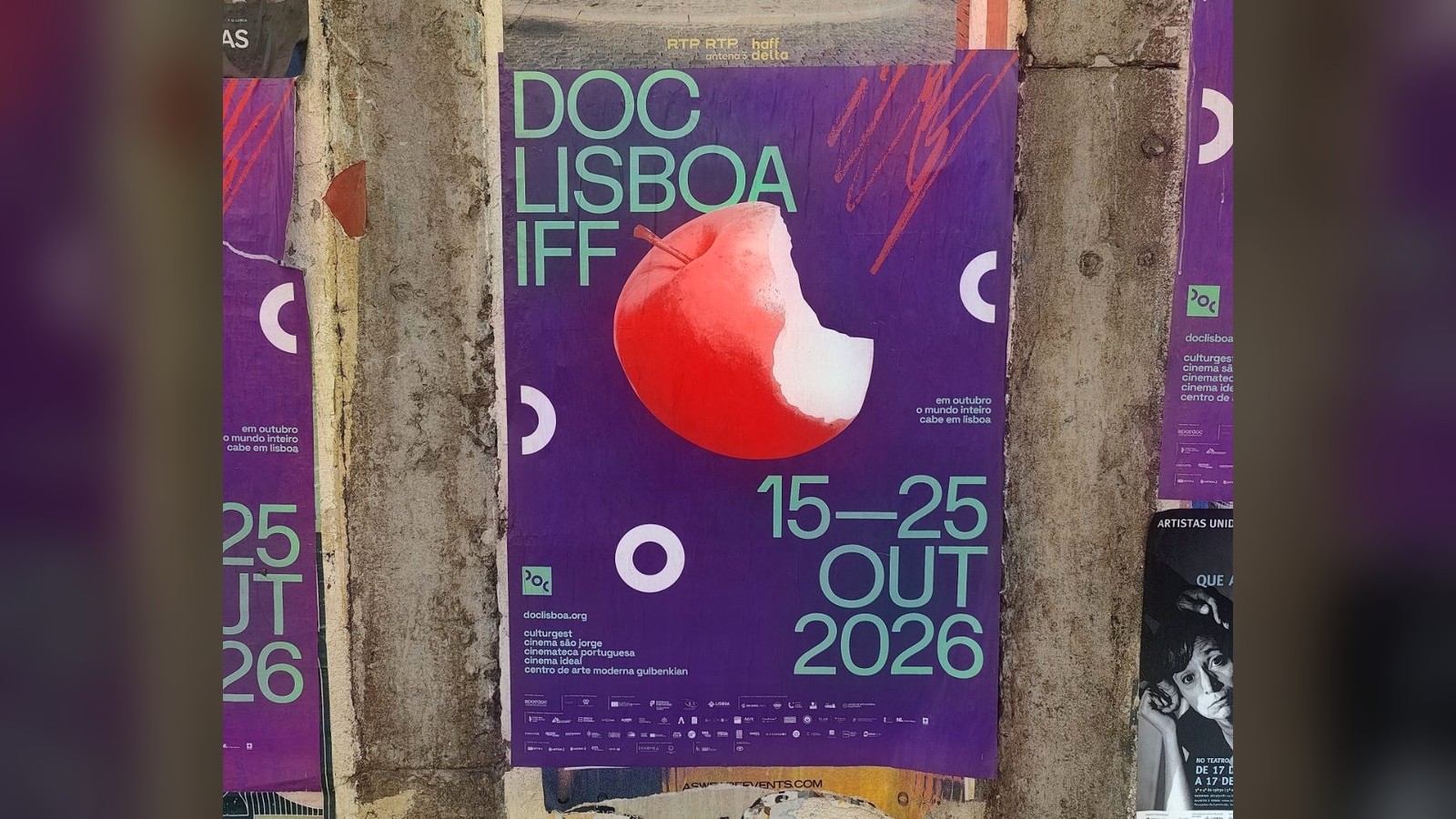
198 films from 51 countries in eleven days. Doclisboa is already underway, with a week of screenings still ahead before the festival ends on 25 October.
The 24th edition spreads across Culturgest, Cinema São Jorge, Cinemateca Portuguesa and Cinema Ideal, with 34 world premieres and 32 Portuguese films. With so much of the work arriving without an established critical consensus, a "top 10" isn't the most useful way in.
So instead of ranking the programme, we read it — and found five stories that keep crossing each other. Pick the thread that pulls you in and follow it.
One thing first: don't let the name fool you. Doclisboa has long refused to treat documentary as a closed genre. This year alone, that means sci-fi noir, essay films, reconstructed archives, a five-and-a-half-hour literary biography, a live piano performance and a Portuguese film shot in IMAX.
Choose your way in
- Images that refuse to disappear
- A Filipino festival hidden inside Doclisboa
- Cinema looking back at cinema
- Lisbon looking at itself and outward
- Memory, politics and the places people come from
1. Images that refuse to disappear
The strongest thread running through Doclisboa 2026 may be the return of old images. Again and again, archives are not simply there to illustrate the past. They become the subject of the film — evidence to be recovered, questioned, rearranged or brought back to life.
-
Asphalt Guerrilla (Guerrilha no Asfalto), Edgar Pêra's opening film, set the tone immediately: memories of Portugal's turbulent 1980s collide with archive material, fiction and artificial intelligence inside a film that is also about the chaotic attempt to make a film.
-
Once Upon a Time in Harlem begins with footage William Greaves shot in 1972 at a gathering of major figures of the Harlem Renaissance. More than fifty years later, the film has been completed by his son, David Greaves — turning unfinished material into a conversation across generations.
-
In-I In Motion is Juliette Binoche's first film as a director. She returns to In-I, the dance-theatre work she created with choreographer Akram Khan, rebuilding the experience from footage shot at the time.
-
An Incomplete Calendar starts with Rhymes and Songs for OPEC, a 1980 Venezuelan record of music from OPEC's member countries, and opens it into a story about oil, Palestine, pan-Arab solidarity and the politics of archives themselves.
Even Last Movies turns cinema history inside out, organising it around the final films watched by people including Franz Kafka, John F. Kennedy, Bette Davis and Kurt Cobain.
2. A Filipino festival hidden inside Doclisboa
The major retrospective at the Cinemateca this year is devoted to Lino Brocka, one of the central figures of Filipino and Asian cinema.
Brocka made more than 60 films in little more than two decades, moving between popular cinema and auteur filmmaking, melodrama and political urgency. His work became inseparable from the inequalities and repression of the Philippines under Ferdinand Marcos.
But follow the programme beyond the retrospective and something more interesting appears.
Its curator is Khavn de la Cruz, a major figure in contemporary Filipino independent cinema. On 17 October, Khavn turned remnants of Brocka's surviving film archive into Lino Brocka – National Anarchist, an audiovisual performance at CAM Gulbenkian accompanied by his own live piano improvisation.
Then there is John Torres, one of this year's invited filmmakers in New Visions.
His new The Remotes is a 151-minute sci-fi noir about a cop in mourning, a year after his wife was killed in a mysterious accident linked to a driver app, and his telepathic sister-in-law, whose recorded voice might hold a clue to the case.
Doclisboa itself makes the connection to Brocka's Manila in the Claws of Light: the night-time Manila of Brocka's film reappears in Torres as a city of automation, surveillance and diffuse violence.
Brocka → Khavn → Torres.
What initially looks like a retrospective of a dead master becomes something else: a living line through several generations of Filipino independent cinema.
3. Cinema looking back at cinema
Doclisboa opens with a film about trying to make a film. It closes with 95-year-old Alain Cavalier and Thanks for Coming, a new chapter in the filmed diary he has been building around everyday life, ageing and the act of continuing to film.
Between the two, cinema keeps turning the camera back on itself.
-
Torino Shadow, by Jia Zhangke, follows a woman travelling from southern China to Turin in search of her husband, only to find herself — and cinema — again.
-
Orson Welles: The One-Man Band, by Oja Kodar and Vassili Silovic, gathers rare material from Welles' unfinished and unreleased projects.
-
Nino – A Film About Nino Rota, edited and directed by Walter Fasano and narrated by Sting, looks beyond Rota's famous scores for Fellini, Visconti and Coppola to the composer's broader musical life.
-
The Pervert's Guide to Utopias reunites filmmaker Sophie Fiennes and Slavoj Žižek for a third trip through cinema, ideology and the stories societies tell themselves about the future.
And then there is Life of Jorge Luis Borges, Mariano Llinás' 324-minute biography of Borges through the documents, books and places he left behind. It screened on 18 October, with two 20-minute intervals. For Llinás, that almost counts as restraint: his La Flor lasts more than thirteen hours.
4. Lisbon looking at itself and outward
For a festival happening in Lisbon — and for anyone who lives here — this may be the most immediately rewarding thread.
13 Pins (13 Alfinetes), by João Pedro Rodrigues and João Rui Guerra da Mata, takes one of Lisbon's own myths — Saint Anthony — through Goya, medieval Lisbon, eighteenth-century Madrid and back into the city today.
The 61-minute world premiere was shot between Lisbon and Madrid in IMAX, which is a wonderfully extravagant format for a film about saints, miracles, love, revenge and blood.
Our Last Film About Lisbon (O Nosso Último Filme sobre Lisboa), by the Left Hand Rotation collective, begins with a darker question: if water eventually swallowed Lisbon, what traces would remain of the struggles that have taken place in its streets? Rather than treating the city as scenery, the film asks who gets to shape it — and whether another Lisbon can still be imagined.
In This Room (Neste Quarto) takes one of Lisbon's most recognisable musical traditions elsewhere. Ana Rocha de Sousa follows fado singer Carminho through Japan, using music, poetry and encounter as a way of thinking about distance and connection.
And Letter to a Young Writer (Carta a Uma Jovem Escritora), by Marta Pessoa, turns to another form of Portuguese cultural memory: five women writers — Olga Gonçalves, Maria Cecília Correia, Alice Sampaio, Graça Pina de Morais and Maria Amélia Neto — whose work has slipped far further from view than it deserves.
5. Memory, politics and the places people come from
The Portuguese presence at Doclisboa is strikingly outward-looking. Some of the most interesting films move between Portugal and places connected to it by colonial history, migration and political memory.
People and Power (Povo e Poder), by Ico Costa, spends 190 minutes inside Mozambique during the country's contested 2024 presidential election. Working in a direct-cinema mode, it moves through a country fifty years after independence, listening to people describe political frustration, inequality and their expectations for the future.
Os Continuadores da Revolução, by Pedro Neves, starts with thousands of negatives photographed by Manuel Roberto during Samora Machel's government in Mozambique. Looking at those images decades later, the film finds the ghosts of both the Mozambican and Portuguese revolutions.
And in Wild Asparagus, filmmaker Avi Mograbi and his friend and Arabic teacher Ali Al Azhari go in search of the ruins of Saffuriya, the Palestinian village from which Ali was expelled during the Nakba in 1948.
The connection between these films is not geography. It is the question underneath them: what remains after a political event becomes history — and who gets to remember it?
Practical bits
Dates: Doclisboa runs until 25 October 2026.
Venues: the main screenings take place at Culturgest, Cinema São Jorge, Cinemateca Portuguesa and Cinema Ideal.
Subtitles: with rare exceptions, Doclisboa films are subtitled in both English and Portuguese when neither language is spoken. If the film is already in English or Portuguese, it is normally subtitled in the other language.
Long films: check runtimes before booking. People and Power, for example, runs 190 minutes, and several festival sessions combine multiple films into one programme.
Schedules can change: check the session again on the day you go.
Explore what's still screening
Find every remaining Doclisboa 2026 session on Séance — filter by day, venue and subtitles, and go straight from a film to its showtimes.
Explore the remaining Doclisboa 2026 screenings →
Follow Séance on Instagram and Facebook for daily picks and discoveries through the rest of the festival.
Programme details checked on 18 October 2026. Sources: the official Doclisboa 2026 programme, film pages, FAQ and festival announcements.
Films in this story
- Guerrilha no AsfaltoNo upcoming screenings
- Once Upon a Time in HarlemNo upcoming screenings
- En nousNo upcoming screenings
- An Incomplete CalendarNo upcoming screenings
- Last MoviesNo upcoming screenings
- The RemotesNo upcoming screenings
- Maynila sa mga Kuko ng LiwanagNo upcoming screenings
- Merci d'être venuNo upcoming screenings
- Torino ShadowNo upcoming screenings
- Orson Welles: The One-Man BandNo upcoming screenings
- Nino - Un film su Nino RotaNo upcoming screenings
- The Pervert's Guide to UtopiasNo upcoming screenings
- Biografía de Jorge Luis BorgesNo upcoming screenings
- 13 AlfinetesNo upcoming screenings
- O Nosso Último Filme sobre LisboaNo upcoming screenings
- Neste QuartoNo upcoming screenings
- Carta a uma Jovem EscritoraNo upcoming screenings
- Povo e PoderNo upcoming screenings
- Os Continuadores da RevoluçãoNo upcoming screenings
- HalayonNo upcoming screenings